Bengaluru city center is busy, energetic, and often crowded with traffic. Areas like MG Road, Brigade Road, Majestic, Shivajinagar, and Cubbon Park attract office workers, tourists, and shoppers all day long. If you are visiting or living in the city, choosing the right transport can save you both money and time.
The three most common ways to travel within central Bengaluru are the metro, auto-rickshaw, and cab. Each has its own cost, comfort level, and convenience. This article compares all three in simple terms to help you decide the cheapest and most practical option.
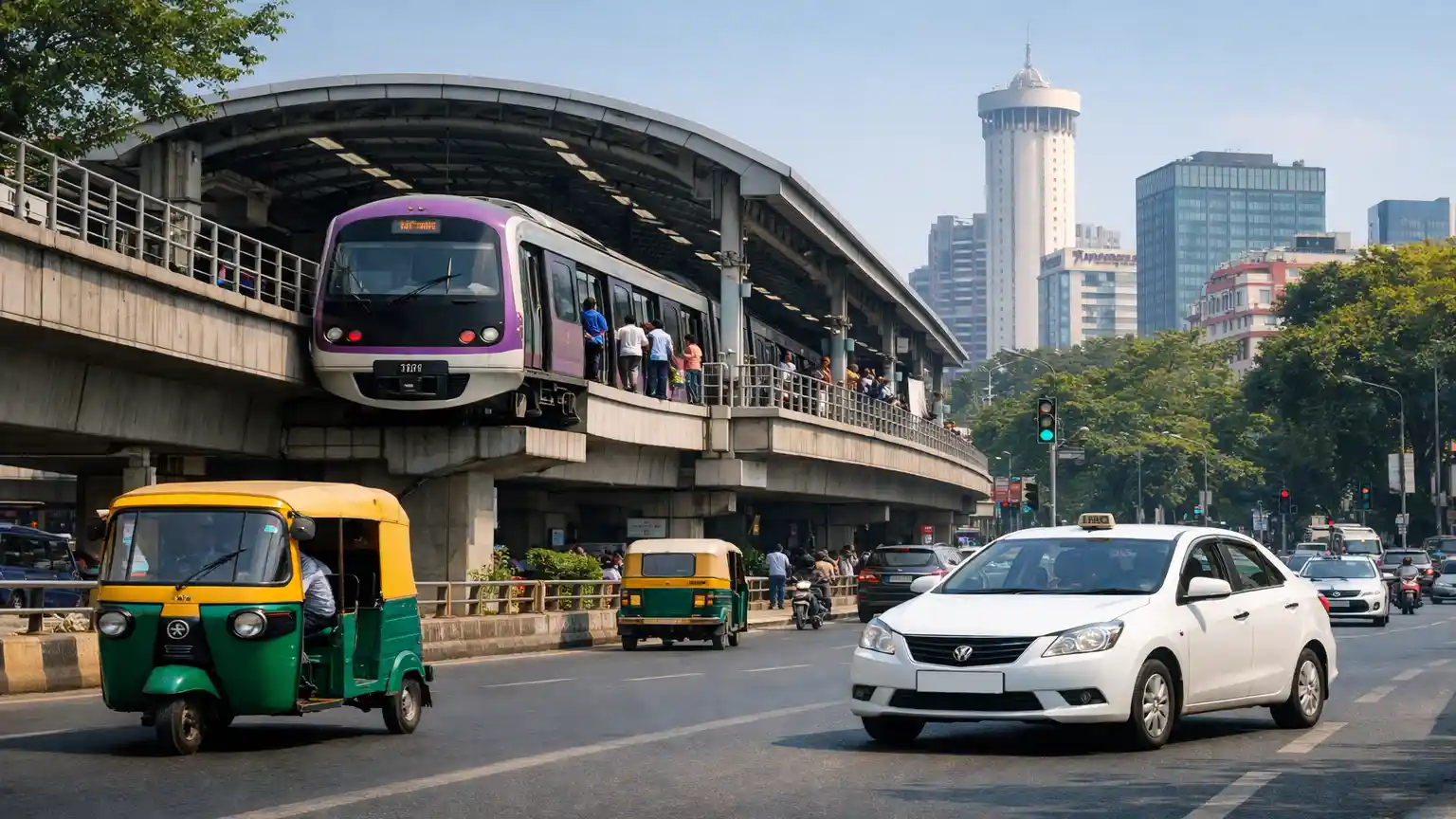
Understanding Bengaluru City Center Travel
Bengaluru traffic is unpredictable. A short distance can sometimes take a long time, especially during office hours. Fuel costs, demand-based pricing, and congestion all affect travel expenses.
The city center is better connected than outer areas, which makes public transport more effective here. Knowing how each option works will help you avoid unnecessary spending.
Bengaluru Metro: The Cheapest and Most Reliable Option
The metro is widely considered the most economical way to travel in the city center. Operated as Namma Metro, it connects key central areas with fast and air-conditioned trains.
Metro Routes Covering City Center
The Purple Line and Green Line cover major central locations such as:
• Majestic (Nadaprabhu Kempegowda Station)
• MG Road
• Cubbon Park
• Vidhana Soudha
• Chickpet
These stations are close to offices, shopping streets, and tourist attractions.
Metro Ticket Cost
Metro fares are distance-based and affordable.
Approximate fares:
• Short distance trips: ₹10–₹20
• Medium distance trips: ₹25–₹35
• Longer central rides: up to ₹50
Using a smart card gives around 5 percent discount on fares and saves time at ticket counters.
Pros of Metro
• Cheapest option for regular travel
• No traffic delays
• Clean and safe
• Fixed pricing with no surge
• Ideal during peak hours
Cons of Metro
• Limited to fixed routes
• Last-mile connectivity needed
• Can be crowded during rush hours
For pure cost savings, metro is clearly the winner within city center limits.
Auto-Rickshaw: Flexible but Often Costly
Auto-rickshaws are everywhere in Bengaluru and are useful for short distances or when the metro is not nearby. However, they are not always cheap.
Auto Fare Structure
The official base fare is usually low, but in reality, prices depend on negotiation or app-based bookings.
Typical costs:
• Short rides (1–3 km): ₹60–₹120
• Medium rides (3–6 km): ₹120–₹200
At night or during rain, prices often increase.
App-Based Autos
Using apps like Ola or Uber auto services provides more transparency, but surge pricing still applies during high demand.
Pros of Auto-Rickshaws
• Easily available
• Good for short distances
• No need to walk much
• Better last-mile connectivity
Cons of Auto-Rickshaws
• Higher cost than metro
• Surge pricing common
• Negotiation can be stressful
• Not always comfortable
Autos are convenient but usually not the cheapest option unless the distance is very short.
Cabs: Comfortable but the Most Expensive
Cabs offer door-to-door comfort and are suitable for families, luggage, or late-night travel. However, they are the most expensive way to move around the city center.
Cab Fare Range
Cab prices depend on distance, time, traffic, and demand.
Typical city center fares:
• Short ride (3–5 km): ₹150–₹300
• Medium ride (6–10 km): ₹300–₹500
• Peak hours or rain: even higher due to surge
Waiting in traffic increases both travel time and fare.
Pros of Cabs
• Most comfortable option
• Air-conditioned
• Best for groups or luggage
• Safe for night travel
Cons of Cabs
• Highest cost
• Surge pricing frequent
• Slow during traffic jams
• Not budget-friendly for daily use
Cabs are better for comfort than savings.
Cost Comparison at a Glance
Here is a simple cost comparison for a typical 5 km city center trip:
Metro: ₹25–₹40
Auto-rickshaw: ₹120–₹180
Cab: ₹250–₹400
From a purely financial point of view, metro travel can cost up to 10 times less than a cab for the same distance.
Which Option Is Cheapest for Different Situations?
Daily Office Commute
Metro is the cheapest and most time-efficient choice. It avoids traffic and keeps monthly travel costs low.
Short Local Travel
If your destination is within 1–2 km and no metro station is nearby, an auto may be reasonable.
Tourist Sightseeing
Metro combined with short walks is ideal for tourists exploring MG Road, Cubbon Park, or Vidhana Soudha.
Late Night or Early Morning
Cabs are safer and more reliable when metro services are closed.
Family or Group Travel
For three or more people traveling together, a cab may become cost-effective compared to multiple auto fares.
Tips to Save Money While Traveling in Bengaluru
• Use a metro smart card instead of single tickets
• Avoid peak hours when using autos or cabs
• Combine metro with walking for short distances
• Check multiple apps before booking autos or cabs
• Plan routes in advance to reduce distance
Small planning steps can significantly reduce travel expenses.
Final Verdict: What Is the Cheapest Way?
For Bengaluru city center, the metro is clearly the cheapest and most reliable mode of transport. It offers fixed pricing, speed, and comfort without traffic stress.
Auto-rickshaws come second in convenience but are more expensive. Cabs provide comfort and safety but should be used selectively due to high costs.
If your goal is saving money, choose the metro whenever possible and use autos only for short connections. Cabs should be reserved for special situations.
With the right mix of transport options, moving around Bengaluru city center can be both affordable and hassle-free.
Also Read: Murshidabad District History and Facts