The River Kolong in Assam is steeped in folklore and mystery, with local legends speaking of supernatural occurrences along its banks. Ancient tales describe ghostly apparitions and unexplained phenomena near the river, particularly after sunset. The surrounding hills are believed to be haunted, with stories of wandering spirits and eerie sounds echoing through the valleys. Locals recount experiences of mysterious lights and strange voices in these areas. These mythical narratives have been passed down through generations, creating an atmosphere of mystique that continues to intrigue visitors and researchers interested in Assam’s rich folklore and paranormal heritage.
The Mythical Stories of Enigmatic Kolong River
The Kolong is a 250 km long anabranch of the Brahmaputra, flowing from Hatimura in Nagaon district through Morigaon and Kamrup before rejoining near Guwahati. In medieval times, it was a vital trade and communication channel under Ahom kings Suhungmung and Pratap Singha. It even inspired poetry and songs, with Nabakanta Barua’s novel Kokadeutar Had casting the river as a central character.
Yet Kolong’s story deepens when folklore enters the frame. One popular legend holds that this river has a mystical “spirit” that protects nearby villages. Some claim it hides unseen currents, underground channels that guide its flow even when its surface seems dry. This “invisible river” myth links Kolong to ancient beliefs, echoing debates over the existence of legendary rivers in Vedic literature.
Another chilling tale centers on Jungal Balahu, the last ruler of Kamata Kingdom, who died while bathing in Kolong. Betrayed by his wife Xukomola, his death is remembered as a tragic yet supernatural event that haunts the riverbanks.
Haunted Hillock: Agnigarh, Tezpur
Agnigarh in Tezpur is not just a geological mound, it’s the stage for one of Assam’s most romantic and mythical tales. According to Shiva Purana, the demon king Banasura built a fortress on this hill to confine his daughter Usha. Enchanted by Krishna’s grandson Aniruddha, she fell in love with him via a dream. With the help of her mystic friend Chitralekha, Aniruddha was magically brought to the hill. When Banasura discovered the stranger, he imprisoned him with snakes, prompting Krishna to wage war. Ultimately, Brahma brokered peace, resolving the conflict.
Today, Agnigarh is a serene tourist spot. Sculpted scenes from the legend adorn its summit romance, conflict, and divine intervention all frozen in stone.
Shikdamakha: Hills of Traps
In the Umswai Valley of Karbi Anglong, the Tiwa village of Shikdamakha is steeped in eerie folklore. Its name translates to “hillocks of traps,” and local legends speak of spirits that lure travellers into deadly pitfalls.
Though now celebrated for cleanliness and community spirit, villagers still whisper about the ancestral dangers that once lurked in the fog-laden hills. The folklore echoes warnings woven into the fabric of tribal culture, reminders that nature itself can be a perilous guardian of its secrets.
Baak: The Water Spirit Demon
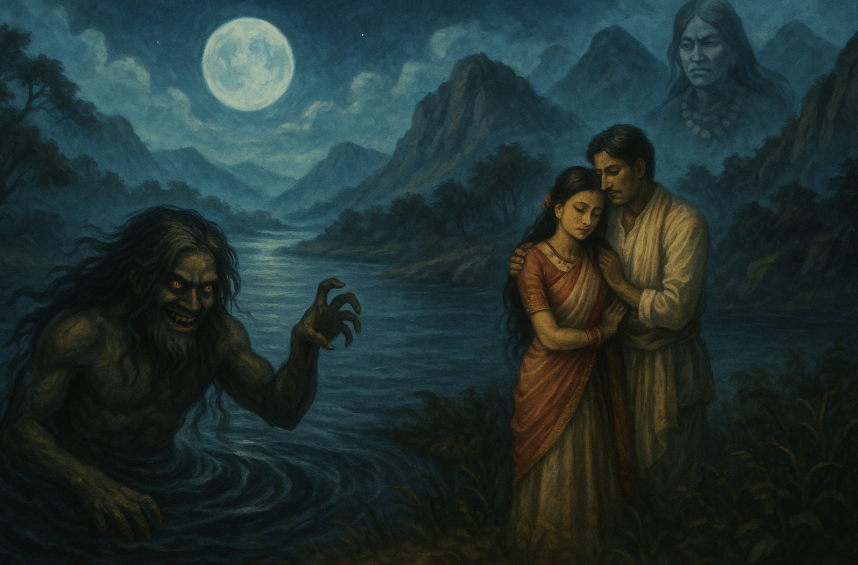
Assam’s rivers and water bodies have long been associated with supernatural beliefs, and one of the most feared spirits in Assamese folklore is the Baak. Often described as a malevolent shapeshifter, the Baak is believed to dwell in the depths of rivers, lakes, and ponds, where it watches and waits. It is notorious for targeting fishermen and those who venture too close to the water after dark. According to legend, the Baak feeds on fish, but its hunger doesn’t stop there, it is said to drown unsuspecting humans, particularly those who fish alone or wander near the water’s edge at night.
What makes the Baak truly terrifying is its ability to assume the form of its victims. After drowning someone, it can imitate their appearance and voice, returning to their home to deceive their family or lure others into the water. This element of the myth adds a chilling psychological dimension, as families may unknowingly welcome a spirit into their midst, thinking it is their loved one. In some versions of the tale, the Baak doesn’t just kill, it replaces.
To protect against this spirit, local fishermen and villagers have developed traditional countermeasures. One common belief is that a torn or broken fishing net can ward off the Baak, perhaps symbolizing the spirit’s dislike for damaged tools or the disruption of its territory. People also avoid fishing during certain times of the year or after dark, especially near areas believed to be haunted by water spirits.
Though to outsiders the story may seem like simple superstition, the legend of the Baak reflects a deeper understanding of nature’s unpredictability. It serves as a cautionary tale, warning of the dangers hidden beneath calm waters and encouraging respect for natural forces that cannot be easily controlled. More broadly, it reveals how rivers like the Kolong are not merely physical features but spiritual landscapes, wild, sacred, and alive with unseen energies.
Jatinga: The Mythical Story of Creepy Mass Bird Suicides
While not on Kolong, Jatinga in Dima Hasao district is widely known for its annual phenomenon of birds taking off into the night sky, only to plunge to their deaths. Though sometimes presented as a natural mystery, local legends ascribe ghostly influences or spirits that guide the birds to doom. It’s a chilling parallel to haunted landscapes not of humans, but of nature’s spectral moments.
Why These Mythical Stories of Kolong River & Haunted Hills of Assam Matter
These stories hold deep significance, not just as tales of mystery and wonder, but as reflections of the cultural soul of Assam. They offer a unique window into how the Assamese people interpret and connect with their natural surroundings. Rivers like the Kolong and hills such as Agnigarh and Shikdamakha are not seen as mere geographical features, they are viewed as living entities, infused with ancestral memories, spiritual symbolism, and divine presence. These legends help communities preserve a sense of identity, linking the past with the present through oral traditions passed down across generations.
What makes these stories even more important is their lack of representation in mainstream literature or tourism narratives. While Assam is known for a few well-promoted cultural elements like Bihu or Kaziranga National Park, the deeper layers of folklore surrounding its haunted hills, mystical rivers, and tribal beliefs remain largely undocumented. Most of these myths are not found in textbooks, scholarly articles, or official tourism materials, which makes them vulnerable to being forgotten.
Also Read: Murshidabad District History